The Indian retail landscape has undergone a drastic transformation over the last few years. Quick delivery of groceries and daily essentials started out as a technological miracle for consumers. However, it has slowly become a massive operational bottleneck for the local businesses actually fulfilling those orders.
Neighborhood shops, bakeries, and restaurants relied on major aggregators to digitize their sales for years. Today, the industry is witnessing the bursting of the quick-commerce bubble. Retailers are realizing that doing all the heavy lifting while giving away a third of their revenue is a completely unsustainable business model.
Here is an inside look at why the market is shifting and how local businesses are reclaiming their digital independence.
The True Cost of the "Aggregator Tax"
Third-party delivery apps offer an undeniable benefit at first glance. They provide visibility. But that visibility comes at a steep price. Platforms routinely charge commissions of 25% to 30% on every single order. This hidden aggregator tax frequently wipes out the entire profit margin for local businesses.
Let us look at the actual math. Imagine your neighborhood bakery or grocery store processes ₹1,00,000 a month in online orders through a delivery app. A 30% commission means the app takes ₹30,000 right off the top. Over the course of a year, that is ₹3,60,000 leaving the business. That money could have paid the salary of a new employee or funded a store renovation. Instead, it goes straight to a tech company.
Shop owners are also beginning to realize they are paying a premium for customers they already had. A regular customer who lives just two streets away might order through a delivery app simply out of habit. The shop then pays a massive fee just because the customer used the app's interface instead of calling the shop directly.
This growing frustration explains the massive surge in search trends for Swiggy Zomato alternatives. Business owners are actively looking for ways to keep their digital sales running without sacrificing their bottom line.
The Hidden Danger: Losing Your Customer Data
Money is not the only thing aggregators take from local shops. They also take the data.
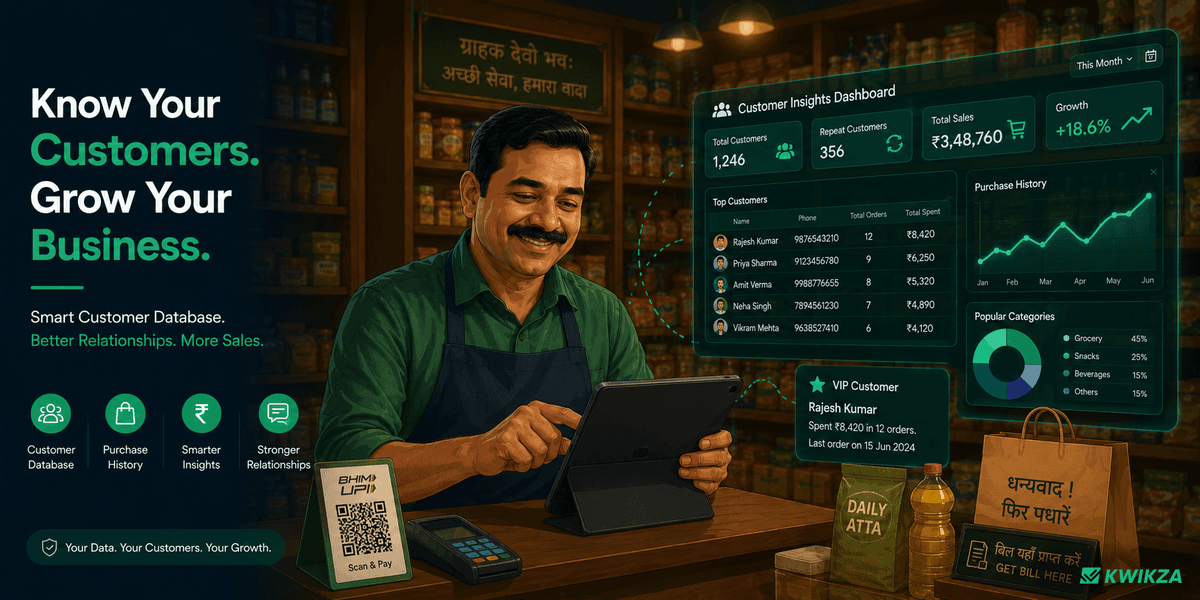
When a customer walks into your store, you can talk to them. You learn their preferences. You build a relationship. When that same customer orders through a massive quick-commerce app, you become blind. The app processes the payment, tracks the customer's phone number, and analyzes their buying habits. You are left with nothing but an order number and a packing slip.
You are essentially renting access to your own neighborhood. If you ever decide to leave the aggregator platform, you have to start building your customer base from zero all over again.
The Shift to Direct-to-Consumer Software
The solution to the aggregator squeeze is not to abandon online sales. The solution is to change your digital infrastructure. The most successful independent retailers are now pivoting toward direct-to-consumer retail software.
A business reclaims three critical assets by owning the digital ordering process. First, eliminating the middleman keeps the profit margins inside the business. Second, direct ordering allows businesses to capture phone numbers and buying habits to build a real customer database. Finally, customers interact directly with the shop's own brand rather than a third-party marketplace.
How Local Shops Can Actually Compete
A common hesitation among small business owners is the fear of being outpaced by tech giants. When asking how to compete with Zepto, Blinkit, or Swiggy Instamart, owners often assume they need a massive logistics fleet or an expensive custom-built app.
The reality of the 2026 market is much simpler. Modern consumers just want friction-free ordering. They do not want to download a new app for every local store. They also do not want to call and dictate an order over a noisy phone line. They just want to click and buy.
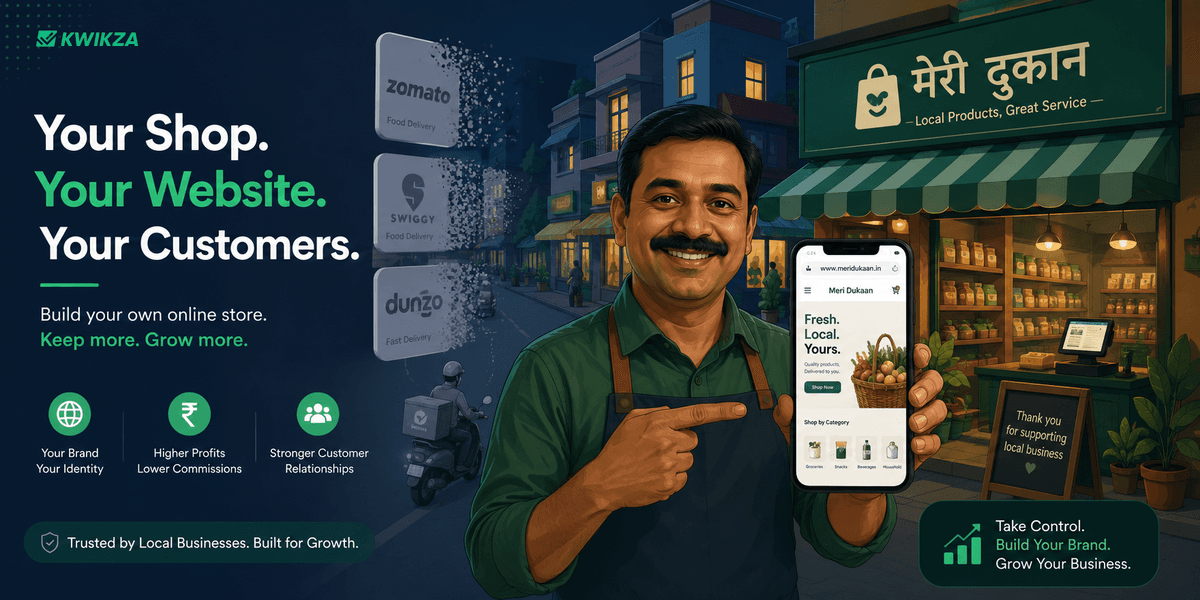
Businesses are solving this by launching their own online store through simple web links. A shop can offer the exact same digital catalog and one-tap checkout experience as the big apps. All they have to do is share a customized URL or place a simple QR code at their billing counter.
Reclaiming Your Neighborhood Sales
The modern retail strategy is shifting from "being on every app" to "owning your own link." You do not need to pay 30% to sell to someone who lives 1 km away. By generating a direct shop link through platforms like Kwikza, you can put a QR code on your counter and let your neighborhood order directly. You provide the exact convenience your customers demand, and you keep 100% of the money.
The software automatically builds your customer database in the background. It handles the inventory. It manages the payments. You just focus on packing the orders and growing your business.
The businesses that will thrive in the next decade are the ones that use technology to empower their own storefronts rather than renting space on someone else's platform. It is time to burst the bubble and take your shop back.

Written by
Kwikza Team
Kwikza helps local Indian retailers take their shops online with AI-powered tools, zero-commission storefronts, and real-time order management.